I’m grateful to start 2026 as Poet of the Month for January in The Lonely Crowd journal .
Three poems will be published from my collection ‘Exposure: war, media, democracy’ due in February from culture & democracy press.
‘Exposure’ is in two parts. The first ‘Soldiers and Civilians’ looks at the Russian invasion of Ukraine and the Gaza/Israel conflict; the second, ‘Citizens and Politicians’ looks at conflicts in democracy and politics.
The Lonely Crowd has chosen ‘A Plan for the Development of Gaza’. My piece about writing the three poems will follow later this month.
“Is there anything left to say about Christmas?” exclaimed a fellow writer (not unkindly) when I mentioned that it is the theme of my new book. I was taken aback because it had never occurred to me that this particular challenge existed. My reply was, “Once I started writing I couldn’t stop.”
Responses to the book have shown me that readers are indeed surprised to find in it things that they consider novel or surprising. If I’d been aiming for novelty I’m pretty sure it would have eluded me. The book was prompted, in fact, by something that is more than nine hundred years old; something I’ve seen only in a photograph.
In the twelfth century, Gislebertus, the stonemason/architect of the cathedral at Autun in the heart of France, took advantage of the flat surfaces of the capitals on some of the pillars supporting the building to carve scenes from the bible, including aspects of the Christmas story. The journey of the ‘wise men from the East’(or kings, or magi) took his fancy. He must have asked himself how their story began. How did the notion of following a star to search for ‘the infant king of the Jews’ come to them? He himself had imagined a whole cathedral into being. Perhaps he had explored the genesis of that extraordinary journey of his own.
He depicts that instant of inspiration by placing The Three Kings in bed together. Two are asleep but one has been prodded into consciousness by the finger of an angel. The awakening king has opened only one eye. He hasn’t yet turned to see that the angel is also pointing to a star. As a result of his choosing this moment just before the ‘action’ begins, it’s we who supply what happens next – the groggy coming-to; the search for what has disturbed him; the sight of the wonderful star; the excited rousing of his companions …
Each of us creates within us a unique set of images in response to this one piece of art; each of us has a dialogue with the elements of the story on, and in, our own terms. Our inner world is affected – in my case it has resulted in a poem, and then a book, prompted by that depiction of the moment before the ‘big moment’.
AUTUN CATHEDRAL, MAGI
Does the sky have tent-poles?
And some cathedrals are forested.
God walks in their depths on a December afternoon
while the topmost branches brush the undersides
of planets fixed mid-orbit
– those stained-glass windows fruiting overhead.
Here no one thinks of weight, of downwardness
and how the roof desires it.
God pauses among the pillars
at a carved capital that always lifts his heart:
an artist like himself, from this blunt-cornered oblong stone,
gives us a bird’s view of a bed
draped in a ruched counterpane, three kings tucked in,
but the eyes of one, popped open, register
Why? Who? still unaware
of the angel at his shoulder, stroking his hand,
whose other index finger points at a star.
God sighs, at the weight borne by the moment
after such a moment; at how he waits
for a man to look up at the sky
and recognise and seize
the chance of joy.
I am in awe of the confidence with which Gislebertus takes control of an awkwardly shaped, trapezoid stone facet. He breaks its confines by placing the star both inside and outside the ‘frame ‘ of the piece of stone. He exploits difficulty, turning a blank surface into something beautiful. Isn’t this what writers try to do? I allowed myself to follow his method, to imagine other moments in the story of The Three Kings.
Two aspects of the story struck me particularly: who do they leave behind when they set out on their journey westward and why do they seem so politically naïve?
From the first question came my conception of The Three Queens. Couldn’t there have been women involved in this quest? At the heart of the book is a set of six long poems: one for each of the queens, giving a glimpse into their experience and perceptions; and one for each king, so that the six poems play off each other in terms of content and character.
Secondly, I allowed myself to pull at a thread in the Gospel account (Matthew’s) that has long bothered me. The Kings arrive at Jerusalem, go straight to the palace and expect the incumbent to be pleased that a potential rival has been born. Shouldn’t they have had a plan for coping if he turned out to be eager to get rid of the child? They mis-read the local political scene completely and they endanger everyone they meet.
The Christmas story is shot through with elements we easily recognise: political expediency of a murderous kind and a topsy-turveying of people on the fringes of society and those on its heights. There is violence and exile, heartless exploitation and selfishness here. So you’ll find in the book poems about climate change, refugees, the suppression of women and other aspects of what I call ‘the dark hinterland’ of Christmas.
It is this grounding in the cold realities of life that gives Christmas, for me, its authenticity. The story is one about love and what it costs and what it offers, or even guarantees. It’s not about mere sentiment.
For these reasons I find Christmas an inexhaustible source of inspiration.
Above image, artwork copyright Martin Erspamer
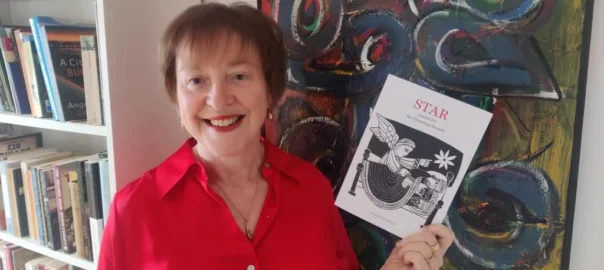
In designing the book I very much hoped to have Gislebertus’s Awakening of the Magi as the cover image. I am thrilled to have Martin Erspamer’s wonderful linocut version and, even more so, to have fifteen of his sensitive images alongside the poems. I especially like what I think of (to myself) as the Awakening of the Family, a sort of companion-piece to the Autun work. It depicts Jospeh, Mary and the baby asleep in a bed just like that of Gislebertus, with the same angel poking Joseph but pointing westward, towards exile.
I have also used this book, my metaphorical block of stone, as a space in which to bring together some of the tongues of the British Isles. You’ll find a poem here in Ulster-Scots, and a little Irish, Welsh and Scots. It’s a small canvas but then a manger is small too.
STAR: poems for the Christmas Season was published August 2024 by Culture And Democracy Press. £10 ISBN 978-1-0686946-0-8
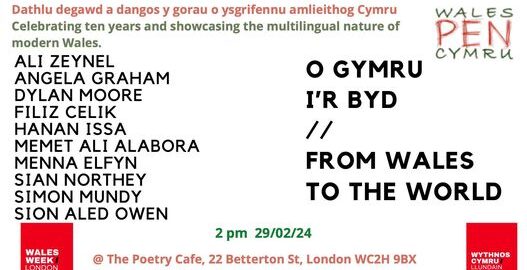
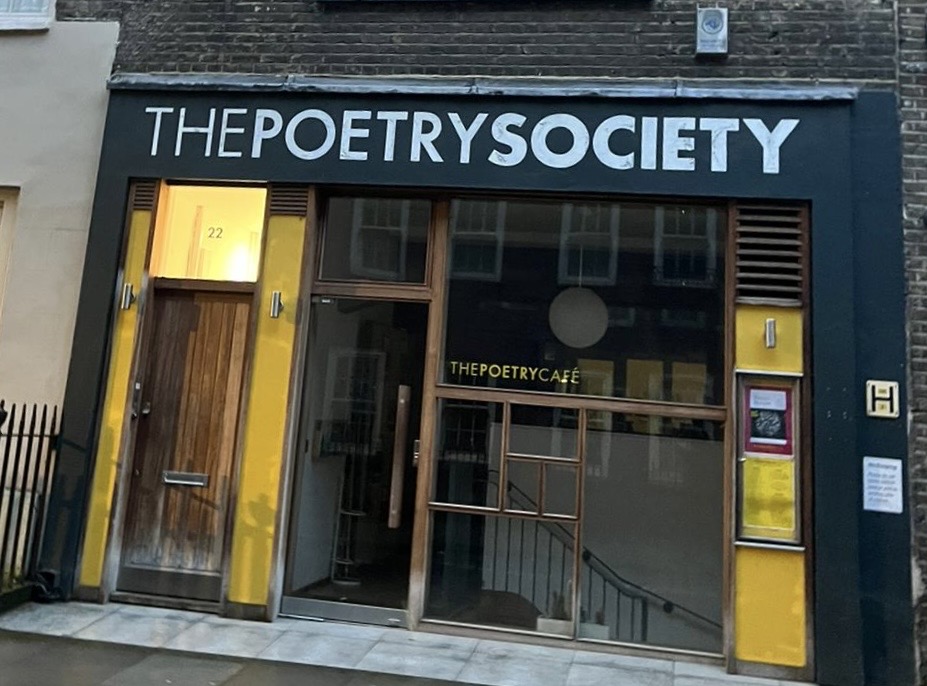
During Wales in London Week, around St David’s Day, there’s a celebration of the significant contribution to London of Welsh culture. On February 29th WalesPENCymru held a poetry reading and music event at The Poetry Society’s Poetry Cafe to mark the organisation’s thenth anniversary. The theme was ‘Wales as a Multilingual Country’.
The Wales branch of PEN is one of the largest in terms of membership. It is affiliated to PEN International.
PEN promotes literature and defends freedom of expression. It campaigns on behalf of writers around the world who are persecuted, imprisoned, harassed and attacked for what they have written. It has committees representing writers in prison, translation and linguistic rights, women writers and a peace committee.
A glance at WalesPENCymru’s website shows the range of events and campaigns that run throughout the year http://walespencymru.org/ They are all designed to support the freedom to speak of writers and journalists worldwide and also in Wales and the UK.
I was invited to read my poem, ‘Colony’ which is about what happens to language in the process of colonisation and I wrote a new poem for the event, ‘Wales/Cymru’.
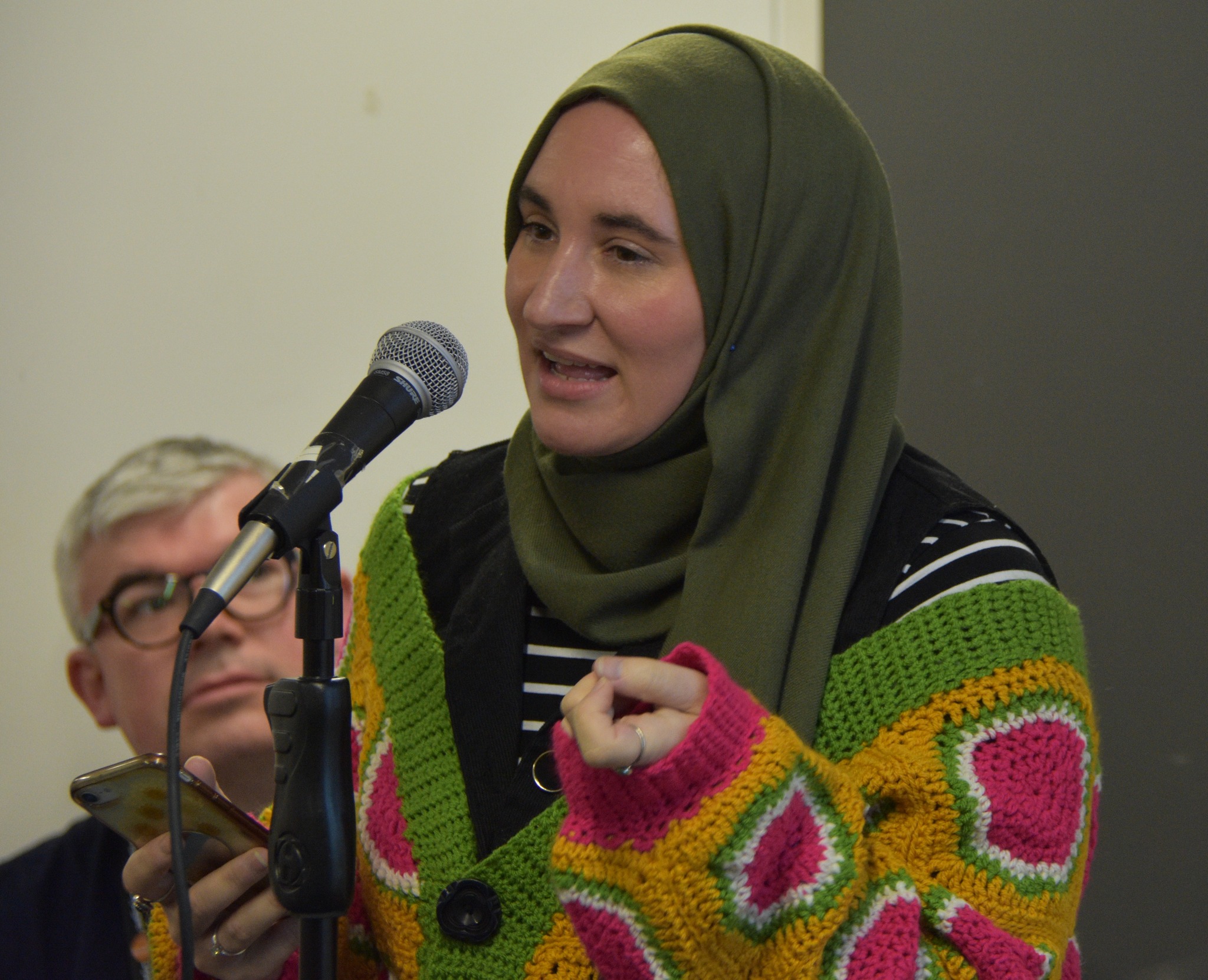
At the London event we listened to the National Poet of Wales, Hanan Issa (below). And to Wales PEN Cymru’s president, the renowned Welsh poet, Menna Elfyn.
The Turkish writer Mehmet Ali Alabora spoke about living in Wales and the importance of the Welsh language.
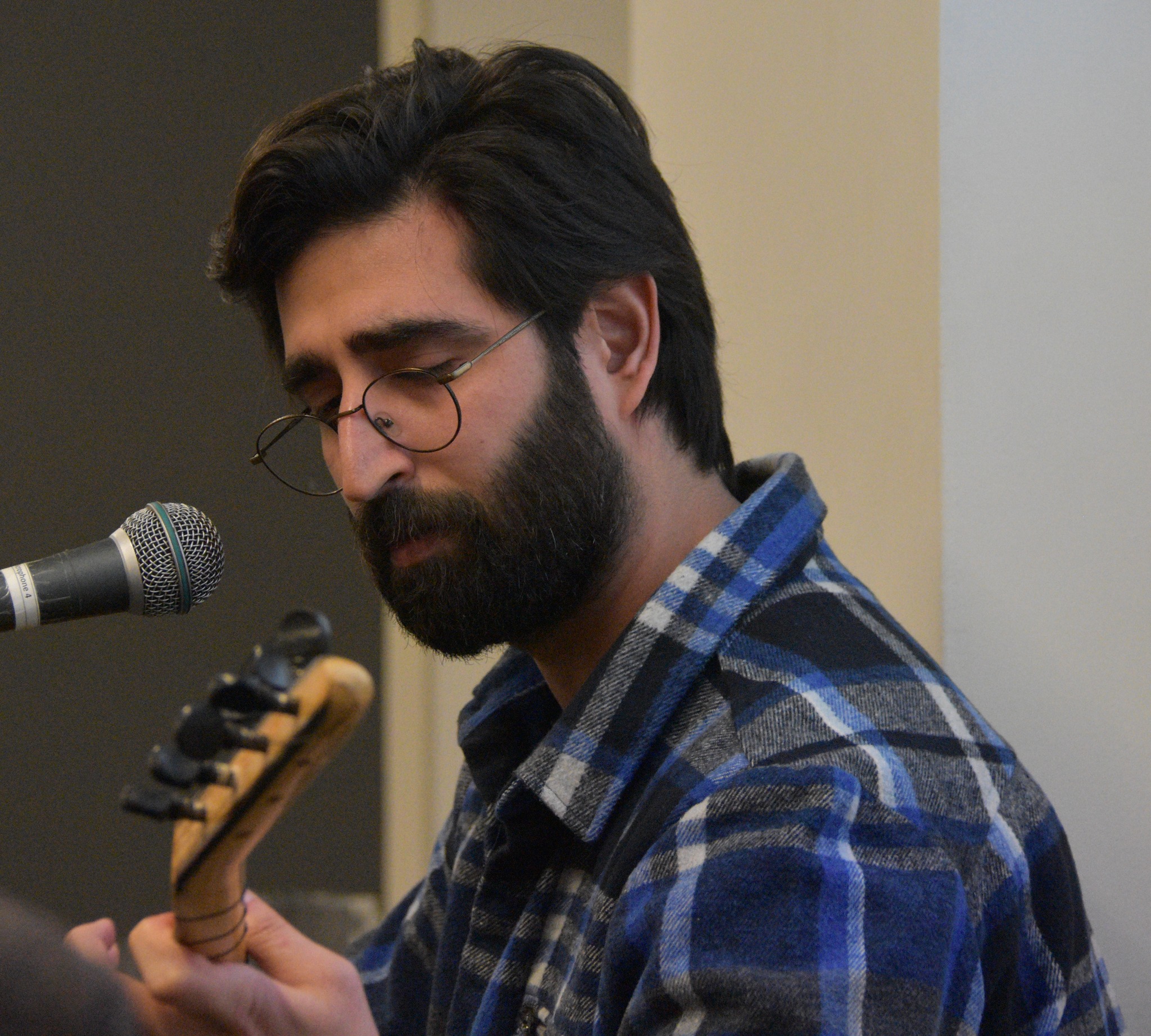
The Kurdish musician, Ali Zeynel (below) played and sang in his minority language and then gave us the Welsh folksong, ‘Dacw ‘nghariad i lawr yn y berllan’.
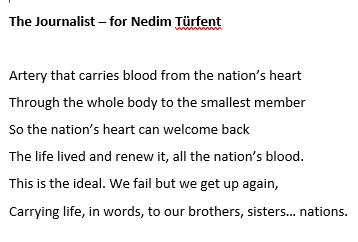
In my collection, Sanctuary https://www.serenbooks.com/book/sanctuary-there-must-be-somewhere/ I have a poem written for Letter With Wings, an Irish PEN campaign for the release of the unjustly imprisoned jounalist, Nedim Turfent. Thankfully he was released in Novemeber 2022, after 6 years in prison.
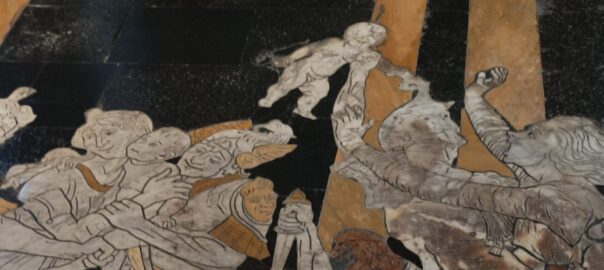
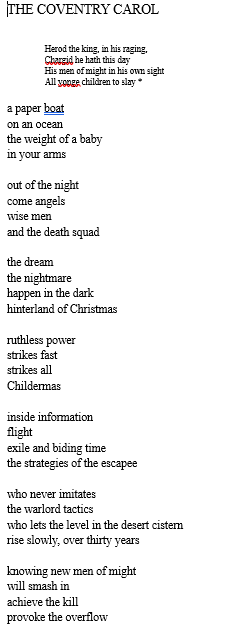
*The medieval Coventry Carol refers to the Slaughter of the Innocents, the killing of all male infants in Bethlehem ordered by King Herod to eradicate ‘the infant king’ the Wise Men had told him had been born. It is commemorated on 28th December every year and has long been known in England as ‘Childermas’. My poem is published in Amethyst Review for this date 2023.
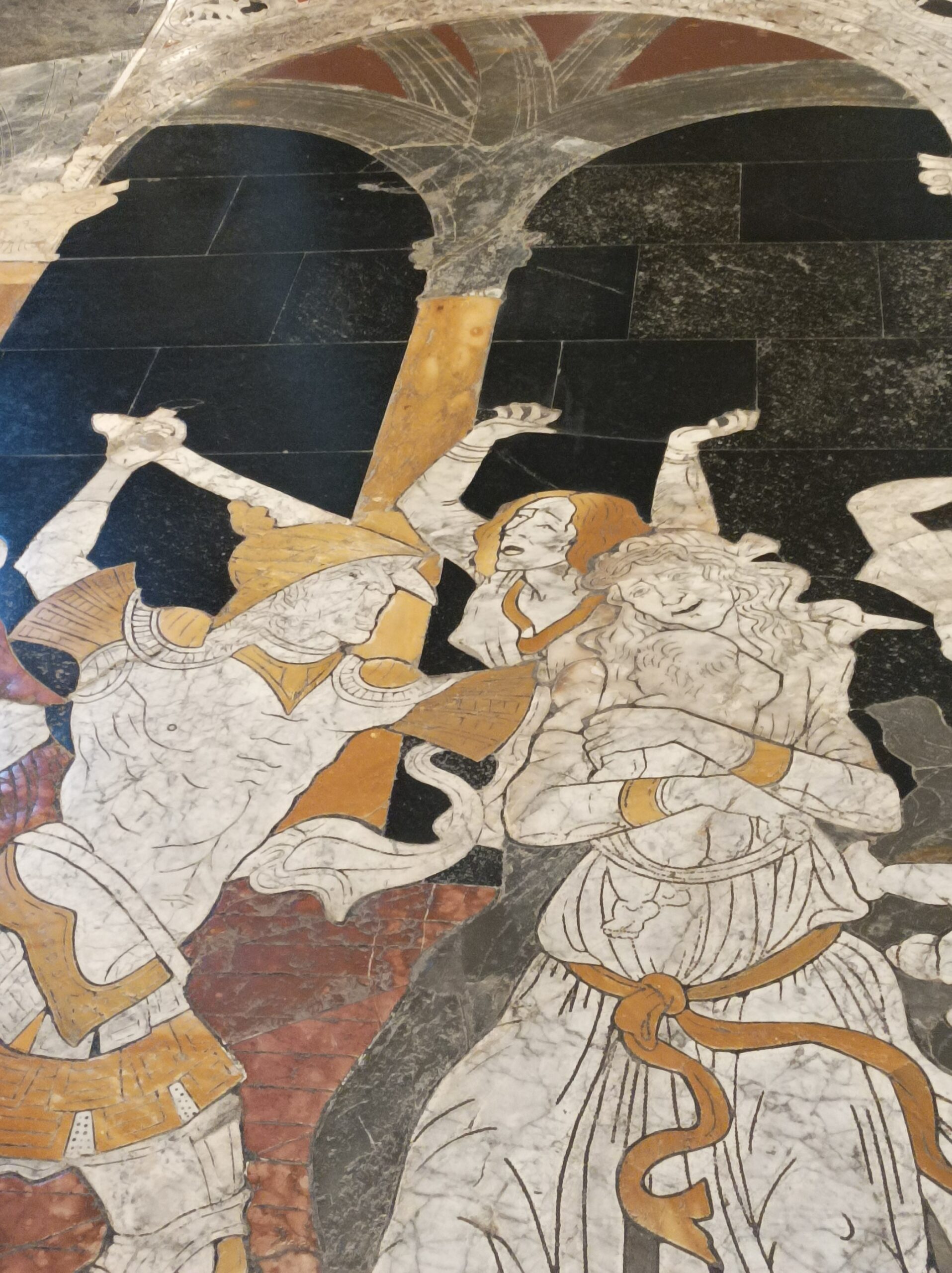
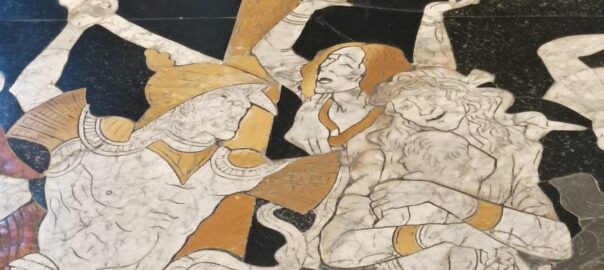
The illustration header is part of the marble inlaid floor of Siena Cathedral depicting the Slaughter (c. 1481).
Tracy Gaughan selects poetry from established and emerging writers from Ireland and the UK.
One of the poems is from the book I’m currently writing on Place and Displacement.
Tracy comments: ‘Angela Graham’s imaginative eloquence of language embodies an ‘at-homeness’ in both the universal and the particular’.
Abhaile is a great means of sampling work from a range of poets. I found among them Hugh McMillan and Caroline Johnson. I’ll give them a wave over there in Scotland. I’m looking forward to my time off next week when I can read everyone’s work.