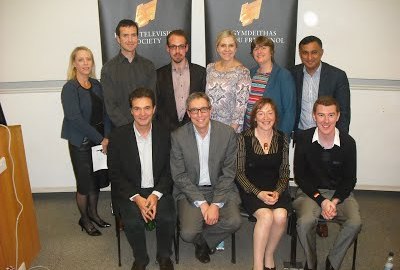
The BBC Trust held a seminar in Cardiff ‘as part of the Charter review process’ on 20th October. It was open to the public but the majority of those present were media workers, academics or correspondents. The Western Mail report on it is accurate but conveys nothing of the atmosphere among the attendees which was, at times, mutinous and, finally, outspokenly critical. These sore spots have to be examined or they will go on festering to no good purpose.
I wondered, while listening to Rhodri Talfan Davies speak this week on two occasions at the National Eisteddfod, if some version of that sentiment ever entered his mind. It certainly entered mine. It’s a striking phrase coined by George Eliot to express her frustration at her contemporaries’ failure to grasp the spirit of the times. How slow we are – those of us not touched by genius such as hers ̶ to see the writing on the cultural wall in front of us. A new dispensation is coming and we need the ideas to meet it.
If a thing is repeated often enough it begins to be as persuasive as though it were true.
We’ve never had it so good, apparently. We live in a televisual Age of Plenty with digital wares piled high in the marketplace and so it’s time for the BBC to withdraw from universality and to stop disadvantaging the commercial sector by its scale and success; the level of public funding gives the BBC an unfair advantage over its competitors and the BBC should become more ‘distinctive’, confining itself to things the market can’t or won’t provide.
From the many strands in the Government Green Paper on BBC Charter Renewal I’d like to tease out two. A failure to convince the UK that these strands are vital parts of the broadcasting web, and not mere loose ends, will cost us dear in Wales.
We all remember Leveson. And we still hear late rumblings from that consideration of corruption in the UK press as well as continuing debate as to how best to deal with it. A need for regulation was generally acknowledged but what system should be used? The compromise reached was the creation of self-regulators overseen by a Recognition Panel established by Royal Charter and the Panel came to Cardiff on 14th July.
BBC Radio Wales 5th July & 9th July; iplayer till 3rd August
With the tenth anniversary of the London bombings being marked this week, the man who ran the Metropolitan police at the time made a stark admission. Lord Blair said he did not believe the west would be able to defeat such extremism in his lifetime.
Meanwhile the defence secretary seeks parliamentary authority to extend to bombing of ISIS targets to Syria, the prime minister speaks of ‘the struggle of our generation’ and the families of 30 British tourists mourn after the massacre on a beach in Tunisia.
What’s at the root of these atrocities? To what extent is this a religious crisis? And what can be done to prevent such things happening again? Continue reading Defence against Terrorism→
On New Year’s Day this year the Western Mail published an article by the Secretary General of the Muslim Council of Wales, Saleem Kidwai. He claimed that a precious achievement in Welsh cultural life is in jeopardy and that a generation have felt ‘rejected by their fellow Welshmen’.
Welsh-Muslim youth who thought themselves like any other Welsh person got a rude awakening post-9/11— a sort of cultural shock that they were not like any other Welsh person. Overnight, they were the other, the enemy…
As Mr Kidwai set out the traumatic ramifications of this tragic dissociation I felt the force of his appeal that, “As a society… We have to reject any attempts to marginalize Muslims as second-class citizens” but I was perplexed as to how to go about that.
Until I perceived a potential response from the world of journalism itself – from journalism in Wales.
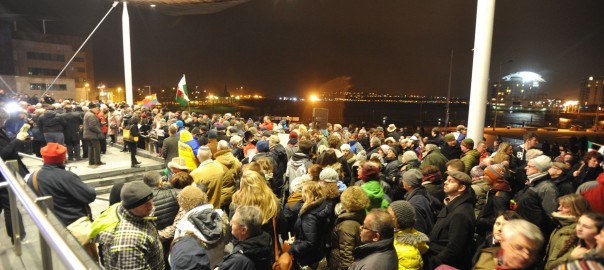
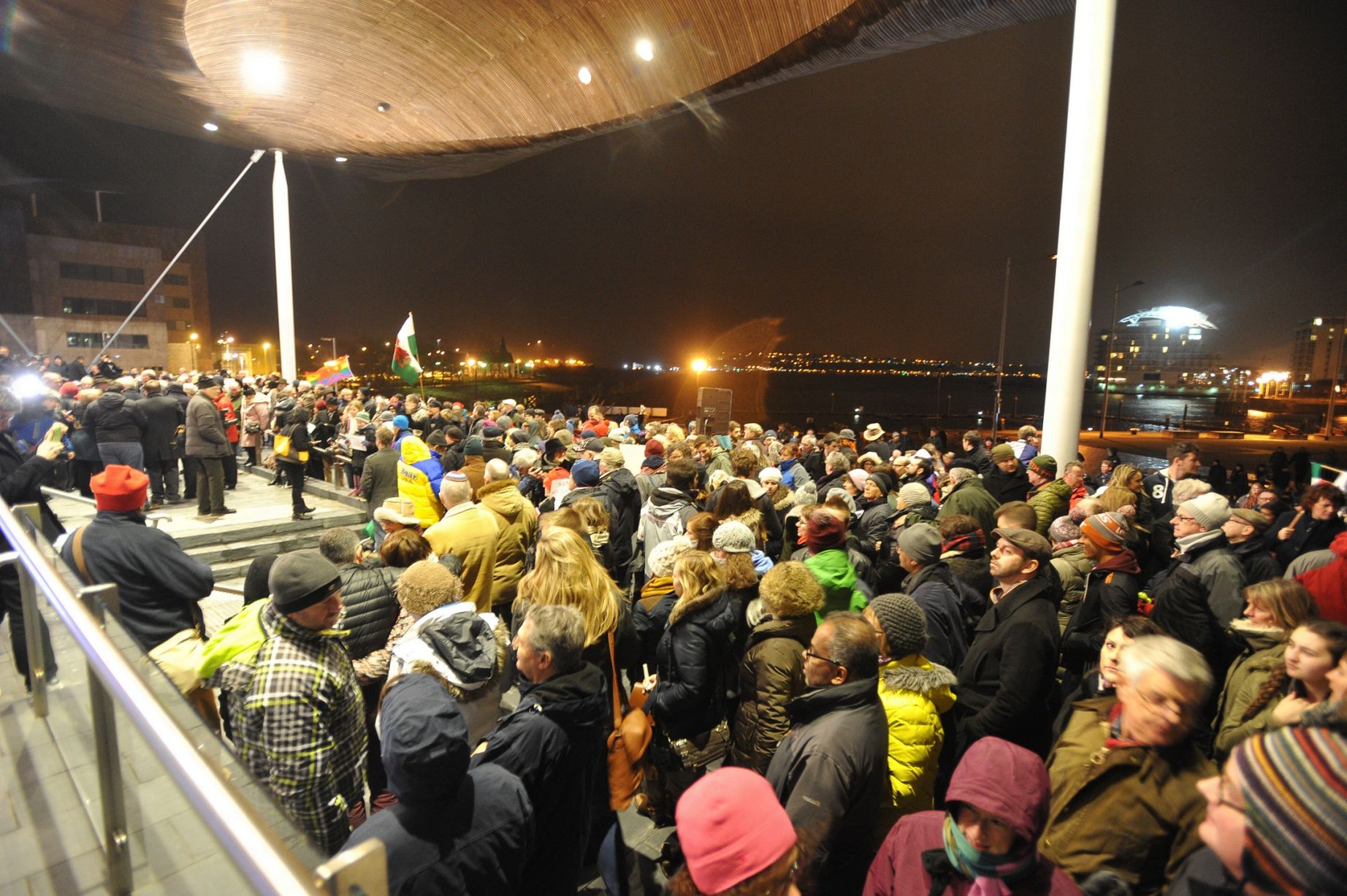
Silent rally in Cardiff in the wake of the Charlie Hebdo killings
A WORKSHOP for CARDIFF UNIVERSITY GRADUATE COLLEGE
11TH February
This is the fourth year I’ve presented this 3-hour workshop. I designed it as a contribution towards bridging the gap between the media and academia. I believe it still to be an unusual offer amongst university training because media training offered to academics is usually in the area of short-form and news-related input, not in long-form documentary. Between these two forms there are significant differences in working practice for journalists and, from the academics’ perspective, the skills needed to have a happy time as a contributor to a documentary are different to those that will produce a snappy sound-bite.
Academia and the media are two worlds which can intersect very fruitfully. However, when they don’t understand each other’s priorities and practices there are sometimes tears before bedtime.
Unanimous praise for Calvary but disagreement over whether religion has ‘moved to the periphery of Irish life’
Fun being among the reviewers but I found myself at odds with them on this point.
Far from religion being on the side-lines, this film presents it as being so close to Irish hearts that its betrayal by clerical abuse of children results in a seething anger against clerics and the Catholic Church. Religion has failed but faith, in this film, is precious.
My favourite film, Bresson’s ‘Diary of a Country Priest’ is the model here. In both films a good priest is surrounded by embittered, suffering parishioners who taunt and confront him with the monstrosity and absurdity of suffering. There is plenty of jeopardy of the usual who-dunnit type but even more hangs on the risk that the priest will compromise his principles from sheer fellow-feeling.
A key role is that of the newly bereaved French wife whose clear-eyed acceptance of enormous loss proves a touchstone. Integrity, the coherence between what a person believes and what he or she does, is a major theme.
A great cast. Brendan Gleeson and his son, Domhnall are powerful in one of the many one-to-one encounters.
Why do we get angry at suffering as though it is something unexpected? That’s a question I feel this film put in front of me.