I’m taking a sabbatical till 1st September
I’m taking a sabbatical till 1st September
Religion is an element in many high profile stories today but how well are journalists supported in their efforts to understand and interpret its role? I have organised with NUJ Training Wales the first event in Wales to address this urgent skills issue.
WHEN RELIGION MAKES THE NEWS: Workshop & Networking Event, Cardiff
A workshop for all journalists living or working in Wales: 8th November 2016
Continue reading When Religion Makes the News – A Workshop for Journalists“Here’s a man who plays hide and seek with the secret police and cuts his prison cell bars to escape as he faces the gallows”, says Guto Harri in this 60-minute documentary about St John Roberts (repeated on Sunday, 3rd April at 10pm on S4C with English sub-titles). “He acts more like James Bond than a saint. The issues underlying the history are echoed today, dealing as they do with someone considered to be a religious extremist, living abroad and considered a threat to the very fabric of the state.”
Continue reading Merthyr Meirionnydd – A Welsh Martyr
The series DNA Cymru for S4C,which I produced for Green Bay Media along with Wynford Jones, has earned a Nomination in the Best Factual Series category of the Celtic Media Festival 20 -22 April.
Continue reading Nomination for DNA Cymru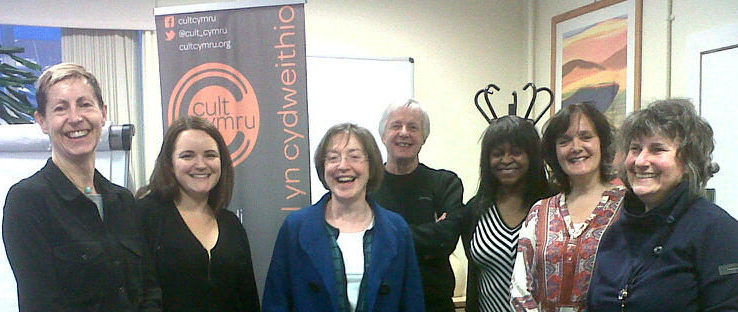
I never fail to be impressed by how well participants in this workshop grasp the pitching principles I offer. I am convinced that most people are aware of what it takes to make a good sales pitch but perhaps have not had the opportunity to pull what they know together and also to reach for the sales person hidden inside each of us. And it’s fun – as you can see in the photograph above – happy faces at the end of the workshop I delivered on 10th March! Continue reading Pitch Your Ideas Workshop
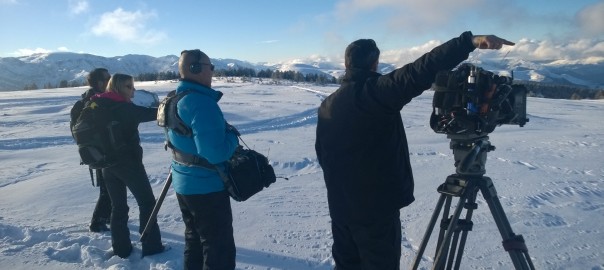
Another fascinating group of people on my workshop for academics about involvement in tv documentary on 1st March.
This three-hour session for Cardiff University Graduate College covers what an academic needs to know about how tv documentary gets developed, commissioned and made and how academics can contribute successfully and enjoyably. Universities commonly offer training in how to engage with news via sound-bites but seldom on what it means to be involved in long-form output or series.
The feedback was uniformly excellent.
Mae Cymru DNA Wales yn brosiect aml-gyfrwng sydd ag uchelgais mawr – dim llai nac ateb yr hen gwestiwn: o ble daeth y Cymry?
Who are the Welsh? What links us to the rest of the world? And what sets us apart? Continue reading DNA Cymru – Cyfres Series
ACADEMICS AND TV DOCUMENTARY-MAKING
A WORKSHOP for CARDIFF UNIVERSITY GRADUATE COLLEGE
11TH February
This is the fourth year I’ve presented this 3-hour workshop. I designed it as a contribution towards bridging the gap between the media and academia. I believe it still to be an unusual offer amongst university training because media training offered to academics is usually in the area of short-form and news-related input, not in long-form documentary. Between these two forms there are significant differences in working practice for journalists and, from the academics’ perspective, the skills needed to have a happy time as a contributor to a documentary are different to those that will produce a snappy sound-bite.
Academia and the media are two worlds which can intersect very fruitfully. However, when they don’t understand each other’s priorities and practices there are sometimes tears before bedtime.
The workshop is designed to examine key aspects of both worlds: what do they value? what do they want? what are they for? Where do these overlap and where must one recognise that they differ? Continue reading ACS and DOCS – Academics and TV Documentary-making
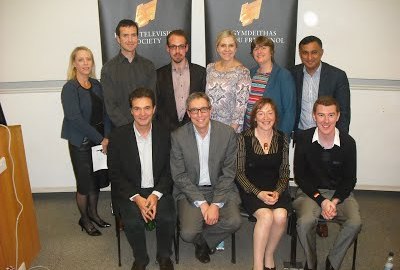
Initiator and Organiser: 24th October 2013

“There are now plans to reflect adverts off the moon,” said Professor Justin Lewis as he argued that all television is ultimately driven by a hidden consumerism. That was just one of the many insights gained as the Wales Centre paired academics with television professionals for one-to-one dialogue and debate at Cardiff University’s School of Journalism, Media and Cultural Studies.
Karin Wahl-Jorgensen reported that the BBC is still trapped in a two major party world when it comes to political reporting, while Jenny Kitzinger told us that the portrayal of people in a coma in hospital drama is not only wrong but actually misleads the public. Other subjects discussed included news provision for the younger teen audience and an attempt to define what the ‘mainstream’ means within commercial British television.
Mike Talbot from ITV Wales said that cage fighting and cuts to council services were both current and mainstream, but that only one was really popular with audiences. So which programme offered true public service broadcasting? As the academics would say – discuss! Tim Hartley

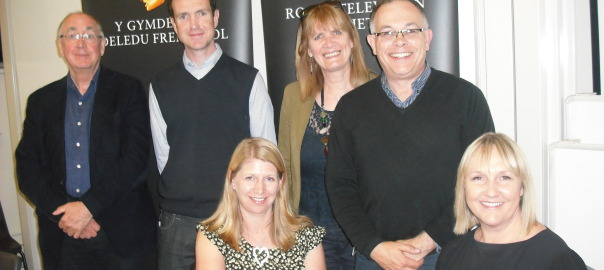
Initiator and Organiser: 5th June 2014
Science on TV in Wales a joint RTS / Cardiff School of Journalism / Science Made Simple event. See my blog post on the JOMEC website.
Television is the British public’s main source of knowledge about science. On network television, science is an established and popular part of the viewing menu, yet in Wales, apart from ecology and nature programmes, science is seldom commissioned for the small screen.
S4C ended a long dearth this year with science series, Dibendraw, so will English-language television follow suit? Does the scarcity of TV science in Wales affect public attitudes to the funding of research and to science education? Does it confirm that the Welsh are not a nation of scientists?
The panel debated the role of science on Welsh television and the role of television in Welsh science.
The fifty people who attended were left in no doubt of the passionate commitment in all three areas of expertise: scientists, programme makers and tv commissioners – but also of the clearly expressed appreciation of, and need for, more opportunities for science and the media to understand each other better. Continue reading Science on Television in Wales